Product Overview
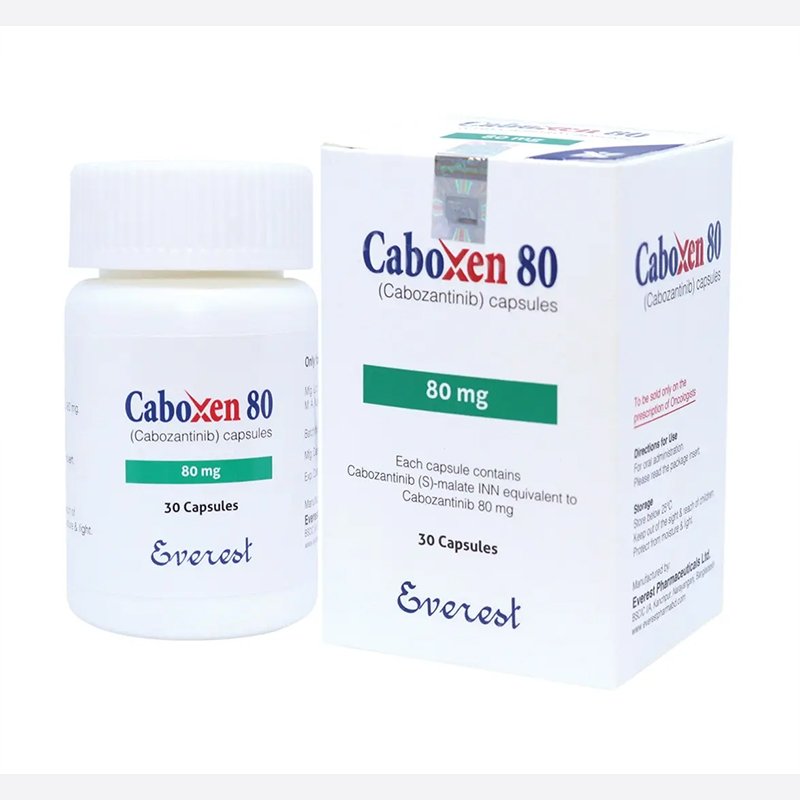
Cabozantinib manufactured by Everest Pharma is a broad-spectrum multi-target anticancer therapy. It inhibits multiple signaling pathways involved in tumor growth, angiogenesis, metastasis, and drug resistance, including:
- MET
- VEGFR1 / VEGFR2 / VEGFR3
- ROS1
- RET
- AXL
- NTRK
- KIT
and several additional molecular targets.
Cabozantinib has demonstrated significant antitumor activity across a wide range of solid tumors, including:
- Renal cell carcinoma (kidney cancer)
- Thyroid cancer
- Liver cancer
- Soft tissue sarcoma
- Non-small cell lung cancer (NSCLC)
- Prostate cancer
- Breast cancer
- Ovarian cancer
- Colorectal cancer
Due to its broad clinical effectiveness, Cabozantinib is often referred to as a “broad-spectrum” targeted therapy among tyrosine kinase inhibitors (TKIs).
🎯 Clinical Benefits in Different Cancers
Renal Cell Carcinoma (RCC)
Clinical studies showed Cabozantinib achieved:
- Objective response rate (ORR):
- 46% vs 18% compared with sunitinib
- Median overall survival (OS):
- 30.3 months vs 21.8 months
The incidence of adverse reactions was similar between treatments:
Common side effects included:
- Diarrhea
- Fatigue
- Hypertension
- Hand-foot syndrome
Cabozantinib has become one of the preferred first-line treatment options for advanced RCC.
Hepatocellular Carcinoma (Liver Cancer)
In advanced liver cancer patients:
- Risk of death reduced by 37%
- Objective response rate approximately 5%
Cabozantinib is now commonly used alongside therapies such as regorafenib and PD-1 inhibitors in advanced hepatocellular carcinoma treatment.
Non-Small Cell Lung Cancer (NSCLC)
Approximately 2% of NSCLC patients carry RET gene rearrangements, which may respond to Cabozantinib.
A 2016 clinical study published in The Lancet Oncology reported:
- Objective response rate: 28%
- Disease control rate: nearly 100%
among RET-rearranged lung cancer patients treated with Cabozantinib.
For EGFR wild-type NSCLC after first-line treatment failure:
- Cabozantinib + Erlotinib combination therapy improved survival compared with either drug alone
Median survival outcomes:
| Treatment Group |
Median Survival |
| Cabozantinib + Erlotinib |
13.3 months |
| Cabozantinib alone |
9.2 months |
| Erlotinib alone |
5.1 months |
Thyroid Cancer
In patients with RET-mutated thyroid cancer:
- Median overall survival increased from 18.9 months to 44.3 months
In the overall patient population:
- Median overall survival improved from 21.1 months to 26.6 months
🦴 Bone Metastasis Control
Several targets inhibited by Cabozantinib are involved in the development of bone metastases.
Cabozantinib has shown strong activity in controlling bone metastatic disease and is widely used in:
- Renal cell carcinoma with bone metastases
- Prostate cancer with bone metastases
🧬 Combination Immunotherapy Potential
Cabozantinib may improve the effectiveness of PD-1 immunotherapy by reducing immunosuppressive cells within the tumor microenvironment, including myeloid-derived suppressor cells (MDSCs).
Because of this, Cabozantinib is increasingly studied as a preferred combination partner with PD-1 inhibitors, with encouraging clinical outcomes reported in multiple studies.
📌 Indications
Cabozantinib is commonly indicated for:
- Advanced renal cell carcinoma previously treated with anti-angiogenic therapy
- Unresectable medullary thyroid cancer
- Hepatocellular carcinoma after resistance to sorafenib treatment
- Advanced prostate cancer with bone metastases
💊 Dosage and Administration
- Recommended dosage:
- 140 mg daily
- (One 80 mg capsule plus three 20 mg capsules)
- Should not be taken with food
- Avoid eating for at least 2 hours before and 1 hour after taking the medication
- Dose reduction or treatment interruption may be considered for adverse reactions
⚠️ Common Side Effects
Common adverse reactions may include:
- Diarrhea
- Nausea
- Vomiting
- Constipation
- Mouth ulcers
- Nosebleeds
- Decreased appetite



Reviews
There are no reviews yet.